Moving large volumes of liquid by road needs a purpose-built tank. It must withstand shocks, keep the load from surging when the truck brakes, and be made of a material that suits the liquid.
Choosing the material
- SS304 — for food products such as milk, cooking oil and clean water.
- SS316L — for more corrosive products or certain chemicals.
- SS400 (carbon steel) — economical for non-food loads such as fuel or industrial water.
Key parts of a road tanker
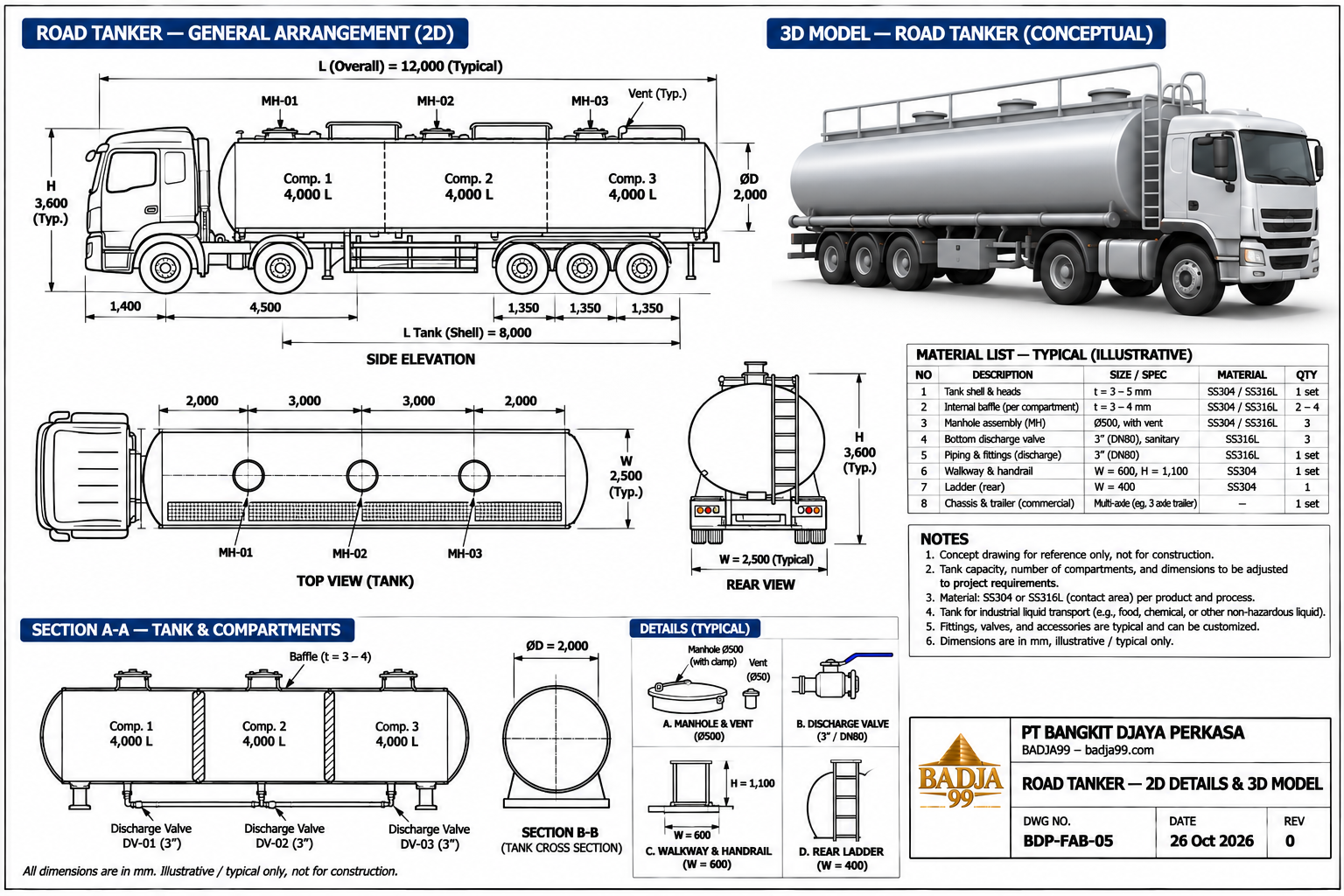
- Compartments and baffles — divide the tank so liquid doesn't surge as the truck moves.
- Manholes and vents — for filling, inspection and cleaning.
- Bottom valves and discharge line — to empty the tank safely.
- Walkway and ladder — safe access to the top.
- Insulation (optional) — keeps loads such as milk at temperature.
Size and number of compartments are matched to the truck chassis. Each compartment is leak tested before handover.
Technical drawing
The drawing below shows an example three-compartment road tanker with top manholes.